Tuesday, January 19, 2010

Sir Degare Goes On

Then a fairy knight, a rape, and a prophecy.
Than segh hi swich a sight:
Toward hire comen a knight,
Gentil, yong, and jolif man;
A robe of scarlet he hadde upon;
His visage was feir, his bodi ech weies;
Of countenaunce right curteis;
Wel farende legges, fot, and honde:
Ther nas non in al the Kynges londe
More apert man than was he.
"Damaisele, welcome mote thou be!
Be thou afered of none wihghte:
Iich am comen here a fairi knyghte;
Mi kynde is armes for to were,
On horse to ride with scheld and spere;
Forthi afered be thou nowt:
I ne have nowt but mi swerd ibrout.
Iich have iloved the mani a yer,
And now we beth us selve her,
Thou best mi lemman ar thou go,
Wether the liketh wel or wo."
Tho nothing ne coude do she
But wep and criede and wolde fle;
And he anon gan hire at holde,
And dide his wille, what he wolde.
He binam hire here maidenhod,
And seththen up toforen hire stod.
"Lemman," he seide, "gent and fre,
Mid schilde I wot that thou schalt be;
Siker ich wot hit worht a knave;
Forthi mi swerd thou sschalt have,
And whenne that he is of elde
That he mai himself biwelde,
Tak him the swerd, and bidde him fonde
To sechen his fader in eche londe.
The swerd his god and avenaunt:
Lo, as I faugt with a geaunt,
I brak the point in his hed;
And siththen, when that he was ded,
I tok hit out and have hit er,
Redi in min aumener.
Yit paraventure time bith
That mi sone mete me with:
Be mi swerd I mai him kenne.
Have god dai! I mot gon henne."
Then she saw such a sight:
Coming toward her was a knight,
A young man, noble and comely;
A scarlet robe upon his body;
Fair were his form and face;
He appeared with such charm and grace;
With well-shaped legs, feet and hands:
There was no other in the King's lands
More attractive than was he.
"Damsel, welcome you must be!
Be not afraid of any of us:
As a fairy knight, I've come thus:
It's in my nature with arms to appear
To ride a horse with shield and spear.
Therefore, be you not afraid
No weapon have I but sword displayed.
I have loved you many a year
And now alone I find you here,
We will make love before you go,
Whether it brings you joy or woe."
Then, nothing could she have done
But weep and scream and try to run;
Her body, at once, he began to seize,
And did his will just as he pleased.
Thus he snatched her of maidenhood,
And afterwards above her stood.
"Beloved," he said, "gentle and mild,
I know that you will be with child;
Indeed, you will give birth to a boy;
So take my sword in your employ.
When he's all grown and has the might
To wield it: Give it as his right,
So that he with sword in hand
May seek his father in every land.
The sword is good and well-wrought
Once, when I a giant fought,
I broke the point in his head;
And later, after he was dead,
I took it out—and so I vouch—
I have it here in my pouch.
Perhaps in the future there will be
A moment when my son meets me:
By my sword, him I'll know.
Have a good day! I now must go."

Monday, January 18, 2010

More Degare

Here's more from Sir Degare, bringing us up to line 88:
That ryche Kynge every yere wolde
A solempne feste make and holde
On hys wyvys mynnyng day,
That was beryed in an abbay
In a foreste there besyde.
With grete meyné he wolde ryde,
Hire dirige do, and masse bothe,
Poure men fede, and naked clothe,
Offring brenge, gret plenté,
And fede the covent with gret daynté.
Toward the abbai als he com ride,
And mani knyghtes bi his side,
His doughter also bi him rod.
Amidde the forest hii abod.
Here chaumberleyn she clepede hire to
And other dammaiseles two
And seide that hii moste alighte
To don here nedes and hire righte;
Thai alight adoun alle thre,
Tweie damaiseles and ssche,
And longe while ther abiden,
Til al the folk was forht iriden.
Thai wolden up and after wolde,
And couthen nowt here way holde.
The wode was rough and thikke, iwis,
And thai token the wai amys.
Thai moste souht and riden west
Into the thikke of the forest.
Into a launde hii ben icome,
And habbeth wel undernome
That thai were amis igon.
Thai light adoun everichon
And cleped and criede al ifere,
Ac no man aright hem ihere.
Thai nist what hem was best to don;
The weder was hot bifor the non;
Hii leien hem doun upon a grene,
Under a chastein tre, ich wene,
And fillen aslepe everichone
Bote the damaisele alone.
She wente aboute and gaderede floures,
And herknede song of wilde foules.
So fer in the launde she goht, iwis,
That she ne wot nevere whare se is.
To hire maidenes she wolde anon.
Ac hi ne wiste never wat wei to gon.
Whenne hi wende best to hem terne,
Aweiward than hi goth wel yerne.
"Allas!" hi seide, "that I was boren!
Nou ich wot ich am forloren!
Wilde bestes me willeth togrinde
Or ani man me sschulle finde!
Every year the wealthy King
Would hold a ritual gathering,
To remember his wife's loss
Who buried in an abbey was
That stood by a forest side.
With a great host he would ride,
To sing dirges and masses both,
Poor men to feed, the naked to clothe,
Offerings were brought in great store,
And monks were endowed with food and more.
Toward the abbey he did ride
With many knights by his side,
His daughter also with him rode:
They made the forest their abode.
Then to her ladies the maiden cried
And ordered that they there abide.
For to answer nature's call,
She the journey had to stall.
From her horse alighted she,
With two damsels for company,
She dallied there far too long
For forth had ridden all the throng.
They would have up and followed so
But did not know which way to go.
Indeed, the wood was rough and thick
And every path seemed to trick
They headed south instead of west:
And in upon them the trees pressed.
Into a land now they crossed
Knowing well the way was lost.
From their steeds they came down
And began to cry on strange ground
Wailing together, they shouted out,
But their cries brought none about.
Since it was hot before midday;
Upon the green, down they lay
In the shade of a chestnut tree
For they knew not what was to be.
Both ladies in waiting fell asleep,
Leaving their mistress the watch to keep.
This lady went gathering flowers
Listening to birds sing for hours
So far from them wandered she
That she got lost eventually.
For her maids she did yearn
But did not know how to return.
A return she hoped to trace and tread
But farther off she wandered instead
"Alas!" she said, "that I was born!
Now I know I am forlorn!
Beastly teeth my bones will grind
Before any man should me find!"

Translating Degare

So, I meant to work on Sir Degare as one of the three romances that I'll talk about in a book chapter (which I'm adding to the thesis in lieu of my Malory chapter). But I got caught up with the possibility of teaching the poem in the future and not being able to find a modernized version of it. So, I've set out to modernize the romance, with a lot of help from the glosses in the TEAMS text edition, the MED, and with inspiration from Nevill Coghill.
Lysteneth, lordinges, gente and fre,
Ich wille you telle of Sire Degarre:
Knightes that were sometyme in londe
Ferli fele wolde fonde
And sechen aventures bi night and dai,
Hou thai mighte here strengthe asai;
So dede a knyght, Sire Degarree:
Ich wille you telle wat man was he.
In Litel Bretaygne was a kyng
Of gret poer in all thing,
Stif in armes under sscheld,
And mochel idouted in the feld.
Ther nas no man, verraiment,
That mighte in werre ne in tornament,
Ne in justes for no thing,
Him out of his sadel bring,
Ne out of his stirop bringe his fot,
So strong he was of bon and blod.
This Kyng he hadde none hair
But a maidenchild, fre and fair;
Here gentiresse and here beauté
Was moche renound in ich countré.
This maiden he loved als his lif,
Of hire was ded the Quene his wif:
In travailing here lif she les.
And tho the maiden of age wes
Kynges sones to him speke,
Emperours and Dukes eke,
To haven his doughter in mariage,
For love of here heritage;
Ac the Kyng answered ever
That no man sschal here halden ever
But yif he mai in turneying
Him out of his sadel bring,
And maken him lesen hise stiropes bayne.
Many assayed and myght not gayne.
Listen, Lords, noble and free,
As I tell of Sir Degare:
Once there were knights in the land
Great numbers were on hand
Who sought adventure by day and night,
In order that they should prove their might;
And this too was Sir Degare's cause:
I now will tell what man he was.
In Brittany there was a king
Who wielded power over everything
Staunchly he carried sword and shield
And many feared him in the field.
Truly, in battle, or tournament,
In jousts arranged for amusement
There was no one, who had the mettle,
To move him an inch in his saddle,
Or fling him down from mount to mud,
So strong he was of bone and blood.
This King, he was without heir
Except for a maid, noble and fair:
Her gentleness and great beauty
Were famed throughout each country.
This daughter he loved as his own life:
In bearing her, the Queen his wife
Had, in birth pangs, her life lost.
And when the maid her childhood crossed
Royal sons let him know,
Emperors too and Dukes also,
That they desired her to wed:
For her inheritance they were mad.
To these suits the King would reply
That no man should with his daughter lie
Unless he might in a joust
Himself from his saddle oust,
And from the stirrups loosen his feet:
Many tried and left in defeat.
More if I make progress this term!

Saturday, January 16, 2010

Speaking of Tongues

In the fluctuating world of adjunct teaching, I may get a class cut in the Spring semester. Classes start on Tuesday and I'll only know on Monday whether or not the class is on.  Of course, this really is no big deal as I'm teaching several sections of the class, so it's not as if I've spent the past months prepping in vain. But in lieu of that class, here begins the blog version of "Arguing with Animals."

I decided to begin the first lesson (after laying out the syllabus in the first first lesson) of my Animals course with this little excerpt. It's a (free) translation of a late fifteenth C. English "Life of Aesop" that was printed by Thomas Caxton. It's about Aesop being smart alecky, serving tongues when his master asks for him to buy the "best" meat and cleverly explaining why, and then serving tongues (again) when his master tells him to go out for the worst meat, and justifying himself. I came across this piece during a medieval retreat where this passage was explicated in brilliant terms by Peter Travis. It inspired me to see whether freshmen would have interesting things to say about this odd little fable that demonstrates how philosophical argument and the embodiedness of meat come together in a most unexpected way.

Thursday, January 14, 2010

Arguing with Animals


I'm teaching a second level composition class this semester and I've designed the course to focus on animals in rhetoric. It's a speaking intensive class (which means students get to practice speaking ... a lot) so I thought it'd be interesting to call it: "Arguing with Animals." Over the next semester, I intend to post here about the texts and lessons, since teaching these courses are such all-consuming endeavors. I've scanned .pdf copies of most of the texts and I'll put links to copies: people who want to read along and comment, are most welcome to do so.

Here's my course description:


"Animals utter different voices; none can speak—for this is the characteristic of man, for all that have a language have a voice, but not all that have a voice have also a language." (Aristotle, The History of Animals
)

This speaking-intensive composition course focuses on animals and "animal-issues." Over the course of the semester, we will read diverse texts that feature animals in a range of rhetorical contexts. The first section of the course, "Animal Encounters," invites you to think about how various authors use language to describe encounters with all manner of non-human animal life. Next, in "Animal Rights," we will examine how rhetoric has been used to petition on behalf of and against animal welfare. The third section of the course, "Topical Animals," will allow us to practice using animals in argument in a series of debates. Finally, we will think about how animal depictions have often been used to govern the boundaries of what we call "the Human." Through informal speaking activities, debates, formal presentations, and writing projects, we will speak and write about what it means to interpret animal voice and silence through human language.

Saturday, January 09, 2010

New Light

And not expecting pardon,
Hardened in heart anew,
But glad to have sat under
Thunder and rain with you,
And grateful too
For sunlight on the garden. (Louis MacNeice)

She glitters in the light. Half-awake, almost freed from the clasp of forgotten dreams, I catch a moment of beauty: streaks of gold, copper, pale-brown, and off-white fuse in an illuminated tapestry woven by the morning sun. Lit and shadowed, she is a cubist matrix of uneven shapes, the softness of her form broken in an uneven jigsaw. The light probes her from sleep. She rises unsteadily from the warm cushion, stretching out into the new day before padding from her bed and clattering off on the hardwood floor. I try to drift back to sleep, hoping for comforting dreams that I'll recall and narrate in detail, but her noises intrude. Toenails strike the floor, sharp short staccatos as she circles the room. Then the low whimpers and whines begin; she noses me. She wants to be let out. She needs to pee.

When Sourdough was a puppy, our wakings were rigidly routine. Then she slept, crated, in the kitchen of our student-slum apartment and the first thing I'd do in the morning would be to leash her and take her down two-flights of stairs into the Lansing cold to pee. Half-awake, we'd crawl back up and I'd put on the coffee. Then, for about fifteen minutes, we'd do drills: basic obedience commands rewarded with rich bits of dehydrated liver and compacted meat, a sequence of maneuvers that culminated in long "sit-stay" exercises. I spoke an abbreviated dialect of "obedience"—single words punctuated by imprecise hand gestures—and she replied with fluid movements. We repeated the exchanges ad nauseum, as inanely as one repeats niceties in bleary-eyed early morning conversation. Filled with coffee and the hope of a common grammar, we'd then take a mile-long walk, the first of three we took daily. Back in the apartment, she'd settle in after a bowlful of kibble as I'd start working on the dissertation: she would sniff around the apartment, bounce in and out of her crate, and usually end up curling up at my feet.

In the loneliness of long days without human contact, as I wrote an obscure monument to psychoanalysis and medieval romance, Sourdough was a constant companion. With Edna away at MSU most of the day, and us away from New York, even further away from Singapore, my only communion with human life was electronic: the unfathomable mysteries of computer mediated communication, masked by the façade of humanizing interfaces—Facebook, gmail, blogs—were my link to the world. But the desire for another world—for the silent warmth of touch, for speechless breathing, and the quiet murmur of a beating heart—bound by the same physical space persisted. Only Sourdough kept this world a constant reality. We shared space and the contact between with fur and skin, has produced a bond between us. In Corporal Compassion, Ralph Acompora describes "symphysis," the "sense of sharing with somebody else a somaesthetic nexus experienced through a direct or systemic (inter)relationship," as a term for sympathy of a "more densely physical orientation." Snared by with troublesome words, untangling difficult meanings and attempting to ground the abstractions of improbable connections in concrete prose, I found a much-needed world in the symphysical throbbing of muscular life at my feet.

Research and writing is an isolating, hermetical activity with which I hide from the world. The gregarious confidence of sharing ideas, of speaking vague premonition into sharp insight has always been absent in my experience of exploring this world of words. Shyness, insecurity, fear of judgment and embarrassment knot together, paralyzing when the occasion to speak about ideas arises. This has occurred several times in my fledgling (but already floundering) academic career. I've found myself blanking out during my Oral exams ("I'm sorry, I can't go on"), caught tongue-tied in an academic retreat ("can't think on my feet"), snatching at quick-receding thoughts when unexpected questions arise on panels ("another faux pas").

Words, however, come easily with Sourdough. Speaking to myself on our walks, mostly under my breath but quite often out loud, I mutter to the golden retriever pacing by my side. To my uncomprehending audience of one, I am relaxed enough to extemporize ideas and review arguments. And when inter-species tension arises from the impossibility of speech, dog speechlessness is more comforting. Just a slight tilt of my head to the side, and a careful glance at Sourdough, and all is well again in the world. Faced with belligerent questions during a conference talk, I imagine I am becoming-dog by holding my head in a side tilt and hope that the same primal instinct that drives intellectual aggression will be defused by an even more ancient bodily response.

I lie awake at night, after having to visit the bathroom, thinking about the prospect of joblessness with an English PhD. Unable to go back to sleep, I grasp at desperate scenarios: being unemployed, another year adjuncting, teaching middle-school in Greensboro, returning to what we left behind in Singapore. Sometimes, I sit at my computer and type out non-academic sentences such as these, hoping to find another way into the world. And when I do sneak back under the covers, it is Sourdough's heavy breathing and occasional gurgles that lull me, finally, back to sleep and uncertain dreams.

But there are certainties that come with the morning: the pattering of paws on hardwood floor and the hope for a glimpse of beauty glittering in new light.


Friday, January 01, 2010

Going Behind the Scenes

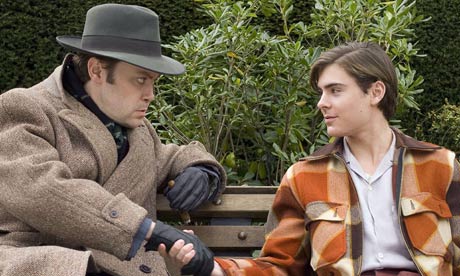
We watched Me and Orson Welles yesterday and I enjoyed it thoroughly (Yes, there's a High School Musical connection in Zac Efron and there were giggling teenage girls in the row behind us who were probably there for Zac: but our desire for Shakespeare and Orson Welles works through circuitous routes, so ...). Anyone who has spent some time with Shakespeare's Julius Caesar or sat through Orson Welles' cinematic work (both as director and actor) would appreciate this film, because it examines how staging Shakespeare as an anti-Fascist political tract was really revolutionary in the 1930s, how Welles' megalomania often overshadowed his art, and how his stubbornness drove his creative vision.

It led me to think about some things that I've watched recently and how they deploy the "movie about the play" trope quite differently. My big generalization: More recent representations of a "behind the scenes" sensibility are more willing to think about the creative process as fraught with risks that place the production in some kind of jeopardy whereas older films about the "show biz" tend to keep the creative process in the sphere of rarefied perfection.

So, some of the things that I've been watching (Me and Orson Welles, Nine, A Midwinter's Tale, Slings and Arrows, and if one thinks about a sports event as a kind of orchestrated performance, Invictus) use our fascination with the "behind-the-scenes" production of a film / play to create the suspense and tension. With numerous hiccups in the production process, the question "Will the play go on?" lingers over these films.

On the other hand, there are the Fred Astair-Ginger Rodgers films that we've been watching. We've watched three so far -- Top Hat, Swing Time, and Shall We Dance. We started watching them because we were intrigued with Astair's dance virtuosity and the original dramatic contexts of songs that have become staples in this household. But a constant in each of these films is Fred Astair's role as a performer, usually (and predictably) as a talented singer-dancer who stars in some Broadway / West End extravaganza. The song and dance numbers that are "staged" within the film thus sit awkwardly as show-pieces that have little impact on the plot (much like how "feature artist" numbers in Bollywood films work). Unlike the newer movies that dramatize the creative process as fraught with anxiety (will the show go on?) and tension (conflicts between directors-admin / actors-directors / actors-other actors), Astair's movies always show him gliding through his role as a performer; instead, the dramatic tensions lie in comedic complications that arise outside the creative process.


[On another note: My love affair with "Cheek to Cheek" has another filmic connection: that wonderful scene in the English Patient where the denizens of the villa take the dying, stretchered Count Almasy out for a romp around the house and into the rain ... can't find a quick vid of it though ... ]

So, having made the observation, I recognize that I don't really have an explanation for this difference. I guess historical distance allows movies about productions to be more cynical and savvy about the creative process. Perhaps societies that are post-industrial (and thus somewhat divorced from the processes of "making") are more interested in the psychic dramas that haunt the making of films and that this is best presented by exploring what can go wrong in the production process. Or, as Edna suggests, no longer is it taboo in valorize the angst involved in the creativity in an "everyone needs a shrink" culture. Surely there are also socio-political realities that influence this mode of fictionalizing the creative process: though I'm too ill-informed to even suggest these. At any rate, the 1952 musical, "Singing in the Rain" is now something that I've got to watch (apart from catching short segments on TV, it's never held my attention) as it's about movie making and promises to be more cynical than the Astair films.

Wednesday, December 30, 2009

Movie Binge

Edna and I have been going to the movies quite a lot. Since the 23rd, we've gone to the cinemas and watched four films--Sherlock Holmes, An Education, It's Complicated, and Nine--which is pretty heavy movie watching traffic for us since we also watch stuff on DVD at home (which involved two Fred Astair films, The Name of the Rose, The Holiday - more Edna than me -, Purab Aur Pacham (me) and some episodes of The Gilmore Girls).

1. Sherlock Holmes: I really liked the gray gray landscape and the grandiose cinematography. The plot was terrible (when we got home I promptly insisted that we watch The Name of the Rose because it's so much better as a "mystery" movie even if that's the least of its concerns). Showing Holmes' mental processes in slow-mo before he acts was a nice touch but then re-playing everything (perfectly) in "real time" after encapsulated how predictable this movie is.

2. It's Complicated. We actually tried to watch this on Sunday but it was sold out. I can't imagine the hordes of teenage girls (yes, they were with their parents, but still ...) wanting to watch this. I didn't even really want to watch it. Still, when we returned on Monday, there was a sizeable crowd and lots of people were really enjoying themselves laughing at the romantic knots that old people tie themselves into. I suppose the fantasy about getting back with one's ex (especially around the Holiday season) after the kids have grown up is pretty powerful.

3. Nine. Because It's Complicated was sold out on Sunday, we watched Nine, which I really wanted to see anyway since I like Fellini films. I thought that the musical about the paralyzing, neurotic creative process (or elegant procrastination) was very nicely done. I have a thing for films where nothing much happens and Nine certainly fit the bill. I think the audience didn't really like it. A lady sitting to our right left during a Penelope Cruz number, never to return. Maybe watching voluptuous women touching themselves in time to music isn't something you're supposed to do on a Sunday in the South.
Still, I appreciated the whole meta-cinematic feel of Nine, especially how the "set" that gets taken down at the end without having actually been used to make a film IS the space where every musical number (save one) happens. It's just that kind of momentary recognition in a film that gestures to its status as a clever construct that I enjoy.

Saturday, December 26, 2009

Fantasizing the A-levels

Having taught ill-prepared college freshmen this semester, I've been thinking a bit about how the A-levels were possibly the hardest and most stressful exams that I've ever had to do. Even though I took them with almost no pressure to do well (I was headed for NUS to do an Arts degree: four Cs would have sufficed; though, in accordance to the grim and deterministic laws of mugging, I ended up with much better grades), the sheer scope and intensity of the thing was quite staggering.

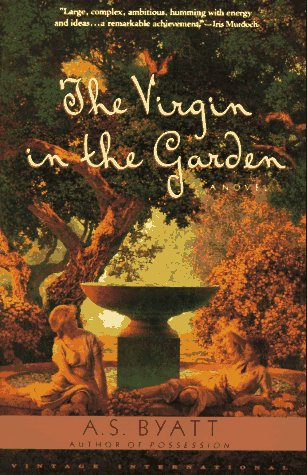
So it was with much interest that I watched An Education this week, where the A-level year of our protagonist, Jenny, played by a be-witching Carey Mulligan, takes an interesting turn as she becomes involved in a romantic tryst with a much older man. Like many a smart, independent minded female protagonist before her, she offers English as an A-level subject (with aspirations to read English at Oxford) and there are nice references to Jane Eyre in the film. A week before, as I struggled with final grading, A.S. Byatt's The Virgin in the Garden was a constant companion. That book also features a precocious 17-year-old on the cusp of an Oxbridge career. Frederica Potter, whose devastating intellect (and grating attempts to demonstrate it) is only matched by her adventurous cavorting with older men ends the book losing her virginity (as does Jenny) under the most unromantic of circumstances.


I'm wondering how the A-level year, when it isn't filled with anxious mugging, does represent a way into adulthood that "senior year" in an American High School doesn't. Are there American films and books that don't infantilize 12th graders and deal with girls on the cusp of becoming women at the same level of sophistication as An Education and The Virgin in the Garden? I've rehearsed a version of this argument on these pages (in a desperate attempt to rationalize my fascination with the High School Musical franchise) but the characters of Twilight series, Fast-times at Ridgemont High, Dazed and Confused, and the Gilmore Girls, and even Dead Poets' Society don't come close to capturing the aspiring sophistication of Jenny and Frederica.

Given that both works are set in the 50s and 60s, and that both Jenny and Frederica contemplate NOT going on to University--one to be married and the other with hopes of pursuing a career on the stage--I suppose the A-levels is much more the symbol of a final academic hurdle than senior year in High school will ever be. I'm sure there are interesting literary and filmic representations of precocious 12th graders but I think that given the cultural imaginary, "senior year" in High School can't ever take on the symbolic weight of the momentousness that is enshrined in taking the A-levels.

The Sidneys

David Brooks's pick of the best in long form journalism for 2009. Definitely much more "serious" in subject matter than what has appeared in previous years, but I guess I'll give them a crack.